Growing and developing at Basker Childcare

Activities at Day Care and Pre-School

At Basker International Childcare, formerly known as Zein Childcare, we believe that every child is a unique individual from birth, with their own personality and a natural drive to develop. This principle guides everything we do. Our pedagogic professionals ensure that children engage in fun, meaningful, and joyful activities that support their growth and development on a daily basis. Together, we take steps in speech and language, social-emotional skills, motor skills, sensory development, language and numeracy.

Looking for a Day Care or Pre-School location? 

Discover our locations

Children playing outside at Basker International Childcare

Supporting growth every step of the way

We follow an Infant–Toddler–Pre-Schooler approach to development, but our integrated programme ensures that each child’s individual growth is supported within the group. Children who progress more quickly in certain areas are further challenged and stimulated by the older children and the pedagogic professionals around them. Likewise, children who take a little longer to grasp particular developmental aspects experience a supportive and encouraging environment where every small step is celebrated and valued. Since many of the families who join us speak a different language at home, our approach also includes specific techniques designed to help children feel comfortable and confident in a foreign-language environment.

Infants (3m - 18m)

The Infant Programme focuses on activities and teacher–child relationships that build trust, interaction, discovery, and communication. Our dedicated infant areas provide a safe space for exploration while allowing young infants to observe and absorb the broader activities within the group. In this stimulating environment, enriched with carefully selected play materials and one-to-one teacher–child interaction, a natural engagement with learning can emerge. Gross and fine motor skills are developed through hands-on sensory experiences, while language development is encouraged through active listening and early communication activities.

Toddlers (18m - 2.5y)

At this age, children begin to seek autonomy and greater opportunities for exploration. Our programme ensures that each child’s individuality and independence are nurtured and respected as they socialise within the group. Activities focus on developing autonomy through exciting, creative, and interactive experiences that help build self-confidence. We create a variety of social situations that foster emotional competence and encourage language development.


Pre School (2.5y - 4y)

At this age, children are natural explorers, ready to grow into independent individuals. Within the vertical grouping, our pedagogic professionals view each child as capable and eager to learn. We explore numbers, letters, colours, shapes, time, measurements, the days of the week, the environment, and much more. Each child is guided to develop and learn at their own pace, with a strong emphasis on building self-belief. Through play-based learning, we embark on a journey led by the children themselves, inspired by their growing curiosity and sense of discovery.

Girl and boy playing with wooden toys

Social & Emotional Development

We consider ourselves partners in the care of every child. We continually invest in our children’s social and emotional growth – a critical area for all children. It is essential that children feel a sense of security and belonging when parents are not around. We have many techniques in place to reduce anxiety and ensure that your child feels happy, relaxed and safe during their time with us. The dimensions which go together to form the social and emotional growth of a child do not evolve naturally.

Nature discovery

Being outdoors simply makes children happy! There’s always something new to discover in nature. They can watch a snail making its slow journey, see flowers open up in the sunshine, and marvel at a caterpillar that will soon turn into a butterfly. At all our locations, we plant seeds, water them, and wait patiently for carrots, tomatoes, or lettuce to appear. That’s how children learn where their food comes from, by growing it with their own hands.

Teacher and boy watering plants
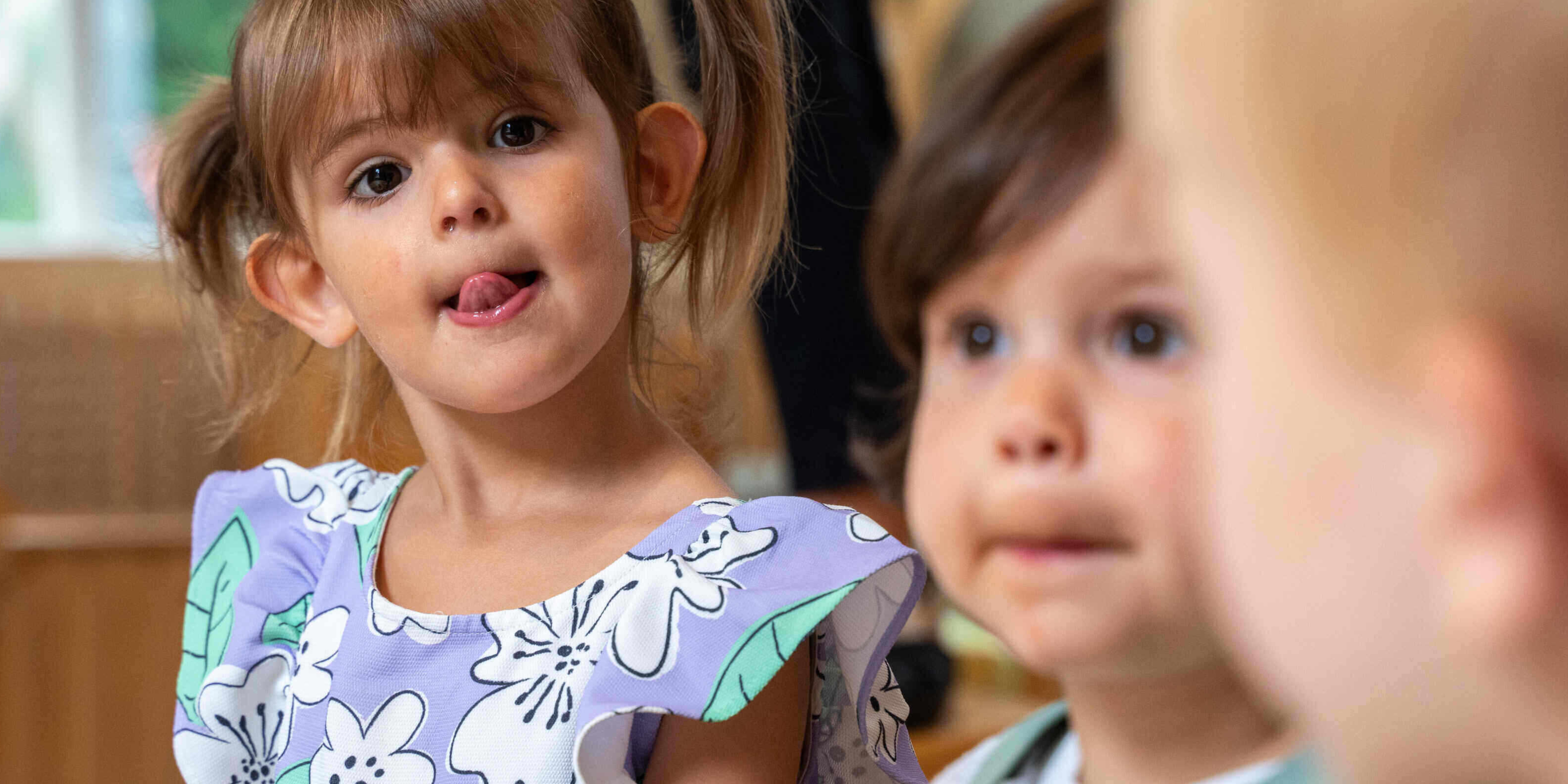
Girl looks curious at Basker Childcare


Creativity

We provide children with all the space they need to imagine, create, and express their ideas. Whether they’re painting, moulding clay, or dressing up, they’re encouraged to explore freely. We also work with repurposed materials such as egg boxes, toilet roll tubes, and corks - showing children how everyday items can become something completely new. This approach helps them develop creativity as well as a sustainable mindset. Our open-ended materials invite independent exploration and expression, without strict rules.

Read more about our sustainable approach to childcare

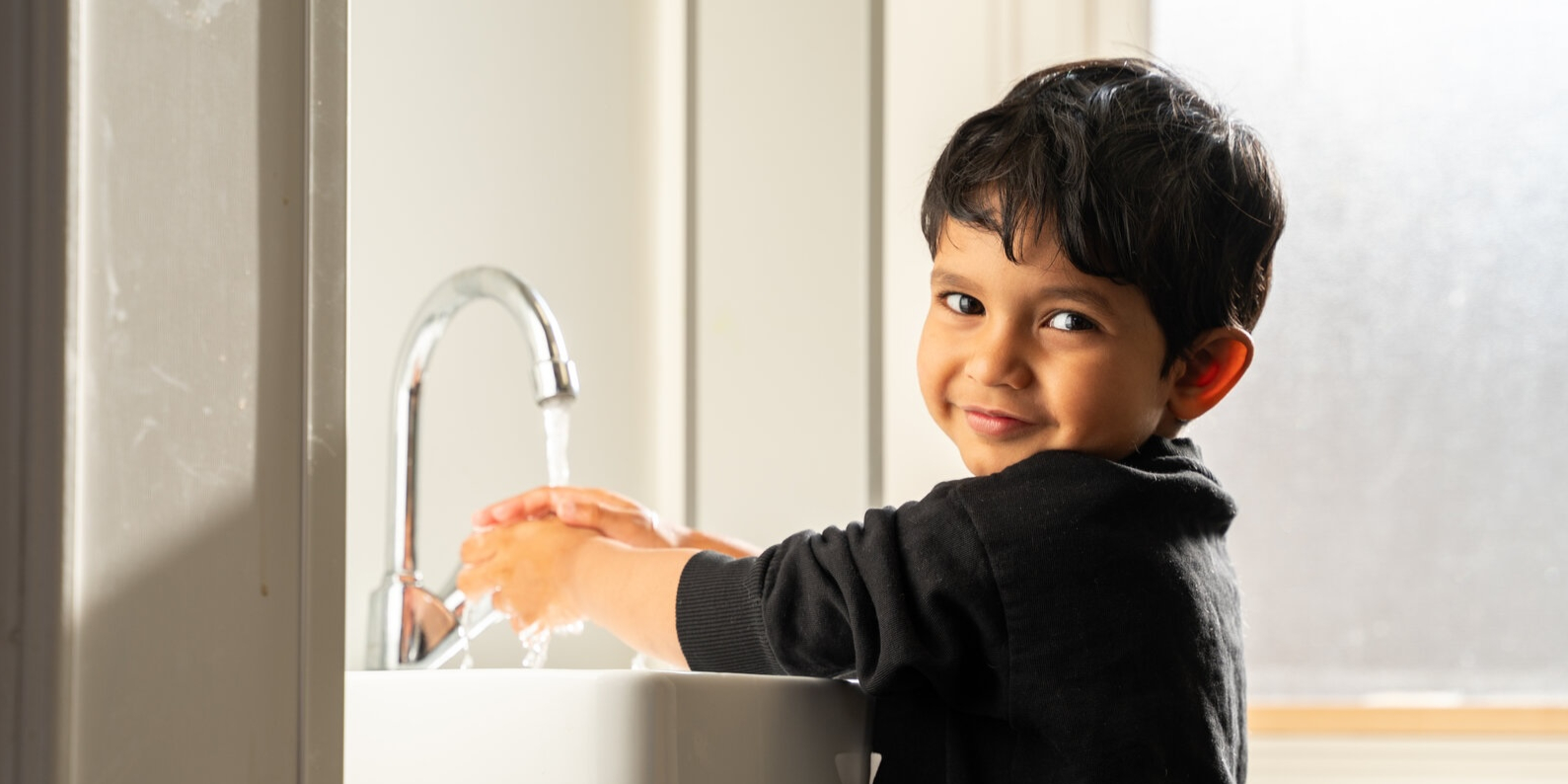
Child at Basker Childcare washes hands


Child participation

Children thrive when they feel that their choices matter. In our Day Care and Pre-School groups, they can choose whether they’d like a banana or an apple, and select the activities that suit them best. When it’s time for lunch, they help set the table together with other children — a simple yet meaningful way to build confidence and independence. Each day, we provide a caring environment where children are seen, heard, and appreciated; a place where they grow step by step, discovering their abilities and developing strong social skills.

Read more about child participation at Basker International Childcare

Caring, well qualified childcare professionals

The course of social and emotional development - whether healthy or unhealthy - depends on the quality of nurturing attachment and stimulation that a child experiences. A relationship with a consistent, caring and attuned adult who actively promotes the development of these dimensions is essential for healthy social-emotional outcomes in young children. 

Children who have experiences such as these are able to recognise their own and others’ emotions, take the perspective of others, and use their emerging cognitive skills to think about appropriate and inappropriate ways of acting.

Actively promoting social and emotional competence includes activities such as:
 

  • Creating an environment in which children feel safe to express their emotions
  • Being emotionally responsive to children and modelling empathy
  • Setting clear expectations and limits (“People in our day care don’t hurt each other.”)
  • Separating emotions from actions (“It’s okay to be angry, but we don’t hit someone when we are angry.”)
  • Encouraging and reinforcing social skills such as greeting others and taking turns
  • Creating opportunities for children to solve problems (“What do you think you should do if another child calls you a bad name?”)